
The Hidden Biology of Shame and Gratitude
A Torre Prime Perspective on Longevity, Healthspan, and the Inner Environment
In Longevity Medicine, we often focus on biomarkers—apoB, glucose, VO₂ max, muscle mass. But there is another layer of physiology that is just as real, measurable, and impactful:
Your emotional baseline.
Two of the most powerful—and often overlooked—forces shaping long-term health are shame and gratitude. These are not just psychological states. They are biological environments that influence inflammation, hormones, behavior, and ultimately, longevity.
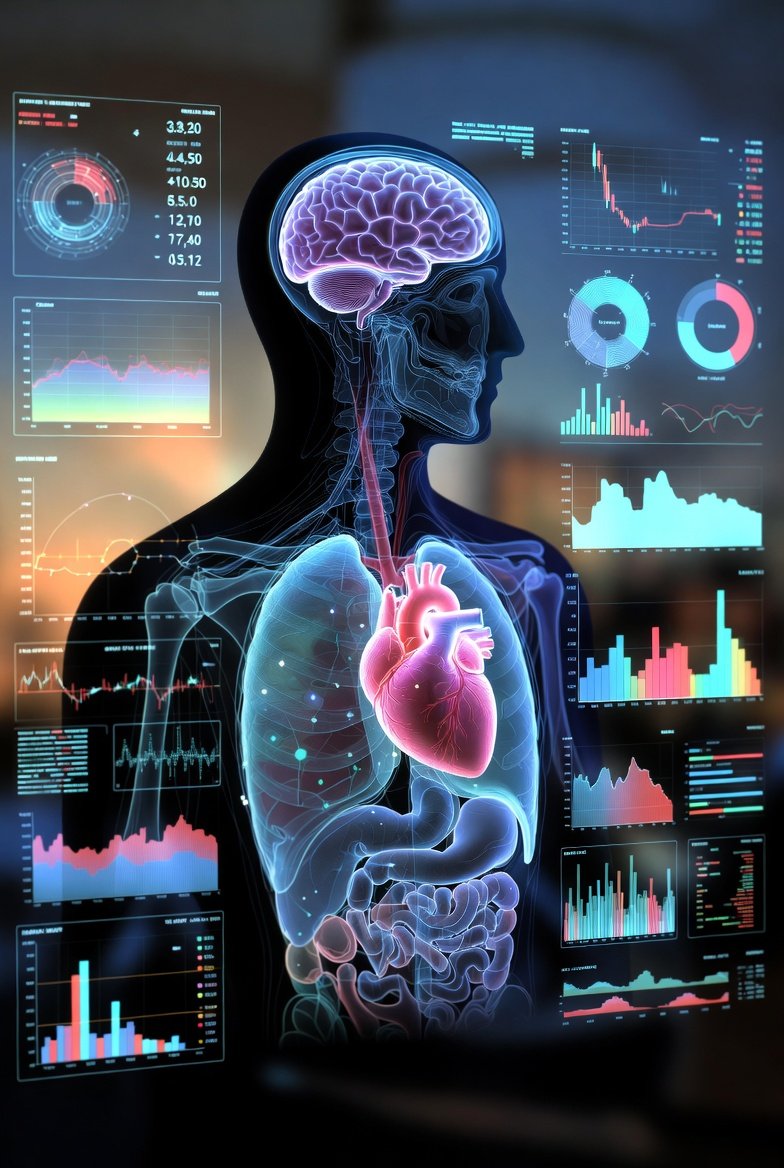
A Torre Prime Perspective on Longevity, Healthspan, and the Inner Environment
In Longevity Medicine, we often focus on biomarkers—apoB, glucose, VO₂ max, muscle mass. But there is another layer of physiology that is just as real, measurable, and impactful:
Your emotional baseline.
Two of the most powerful—and often overlooked—forces shaping long-term health are shame and gratitude. These are not just psychological states. They are biological environments that influence inflammation, hormones, behavior, and ultimately, longevity.
Shame: A Chronic Stress Signal to the Body
Shame is not simply “feeling bad.” It is a global negative self-assessment—a sense that “something is wrong with me.”
From a physiology standpoint, shame behaves like a chronic internal threat signal.
What happens biologically:
Persistent activation of the amygdala (threat detection)
Increased cortisol and stress hormone output
Reduced heart rate variability (HRV) (impaired resilience)
Elevated inflammatory signaling (IL-6, TNF-alpha)
Disruption of sleep architecture
Increased likelihood of insulin resistance
[Inference] Chronic shame may contribute to metabolic dysfunction through sustained sympathetic activation and behavioral coping patterns.
Long-term effects:
Accelerated cardiovascular disease risk
Increased visceral fat accumulation
Impaired immune surveillance (relevant to cancer risk)
Greater risk of depression and addiction behaviors
Reduced engagement in health-promoting behaviors
From a Torre Prime lens:
Shame quietly erodes The Forge, destabilizes The Lighthouse, and disconnects The Horizon.
It is not just emotional—it is anti-longevity.
Gratitude: A Biological Signal of Safety and Abundance
Gratitude is not just a mindset—it is a neurophysiologic state of safety, connection, and sufficiency.
It tells the nervous system:
“You are okay. You have enough. You can relax.”
What happens biologically:
Activation of the parasympathetic nervous system
Increased vagal tone
Improved HRV
Reduction in cortisol levels
Increased dopamine and serotonin activity
Improved sleep quality
Regular gratitude practices are associated with improved autonomic balance and may reduce chronic inflammatory burden.
Long-term effects:
Better cardiovascular resilience
Improved metabolic regulation
Stronger social bonds (a major longevity predictor)
Increased adherence to healthy behaviors
Enhanced emotional regulation and stress tolerance
From a Torre Prime lens:
Gratitude strengthens The Lighthouse, stabilizes The Forge, and fuels The Horizon.
It is a pro-longevity state.
Why This Matters for LONGEVITY Medicine
Most traditional medicine ignores emotional physiology unless it becomes pathology.
But in longevity medicine, we ask a different question:
What is shaping your trajectory decades before disease appears?
Shame and gratitude are trajectory-level variables.
They influence:
Whether you go to the gym—or avoid it
Whether you sleep—or stay dysregulated
Whether you connect—or isolate
Whether you nourish yourself—or self-sabotage
Over time, these patterns compound into:
Cardiometabolic disease
Cognitive decline
Reduced vitality and lifespan
Clinical Translation: What We Do About It
This is not about “just think positive.”
It is about engineering your internal environment with the same intentionality we apply to nutrition, training, and sleep.
1. Identify Shame Patterns (The Sentinel → The Lighthouse)
Ask:
Where do I feel “not enough” in my life?
Where am I avoiding action because of internal judgment?
What health behaviors feel emotionally charged?
Shame thrives in silence and vagueness.
Awareness alone begins to reduce its power.
2. Interrupt the Physiology (The Lighthouse)
When shame is activated:
Slow breathing (4–6 breaths per minute)
Cold water on the face
Step outside and move your body
These are not coping tricks—they are autonomic resets.
3. Build a Daily Gratitude Practice (The Forge → The Horizon)
Simple, consistent, biologically meaningful:
Write 3 specific things you are grateful for daily
Focus on sensory detail (what you saw, felt, experienced)
Spend 20–30 seconds per item actually feeling it
This is how you train the nervous system, not just the mind.
4. Leverage Social Connection
Gratitude expressed outward:
Text someone appreciation
Acknowledge someone directly
Build micro-moments of connection
Social connection is one of the strongest predictors of longevity.
5. Align Identity with Action
Gratitude helps shift identity from:
“I should take care of myself”
→ to“I value myself, so I take care of myself”
This is where behavior becomes sustainable.
The Deeper Truth
Longevity is not just about extending life.
It is about creating a physiology that supports:
Energy
Connection
Purpose
Vitality
Shame contracts that system.
Gratitude expands it.
Torre Prime Closing Perspective
At Torre Prime, we look beyond labs and protocols.
We ask:
What is the internal environment you are living in every day?
Because over decades, that environment becomes:
Your metabolism
Your brain
Your relationships
Your lifespan
You are not just what you eat or how you train.
You are also what you repeatedly feel.
And that is something we can train—intentionally.
How Does My Device Measure Stress — And What Does It Really Mean?
Why your Apple Watch, Oura Ring, WHOOP, Garmin, Samsung Galaxy Watch, or Fitbit may say you’re “stressed” — even when you don’t feel it.
Most people think stress is something you feel: anxiety, tension, overwhelm.
Your wearable thinks stress is something your nervous system is doing.
At Torre Prime, we teach clients to understand this distinction — because it’s the key to using wearables correctly instead of being confused or alarmed by them.
Why your Apple Watch, Oura Ring, WHOOP, Garmin, Samsung Galaxy Watch, or Fitbit may say you’re “stressed” — even when you don’t feel it.
Most people think stress is something you feel: anxiety, tension, overwhelm.
Your wearable thinks stress is something your nervous system is doing.
At Torre Prime, we teach clients to understand this distinction — because it’s the key to using wearables correctly instead of being confused or alarmed by them.
First: What “Stress” Actually Means in Wearables
Important: Your device is not measuring emotions.
It is estimating physiological stress, based on signals like:
Heart Rate Variability (HRV)
Resting heart rate
Breathing rate
Skin temperature
Activity and recovery patterns
Sleep quality
From a longevity perspective, this matters because chronic physiological stress accelerates aging, even when life feels “fine.”
The Core Metric Behind Almost All Stress Scores: HRV
Heart Rate Variability reflects how well your autonomic nervous system adapts.
Higher HRV → flexible, resilient nervous system
Lower HRV → sympathetic (fight-or-flight) dominance
Low HRV does not mean something is wrong — but persistent downward trends are an early warning sign we take seriously in longevity medicine.
How Each Major Device Measures Stress (And What It’s Best For)
Apple Watch
How it measures stress
HRV (intermittent)
Resting heart rate
Breathing rate
Activity load
Optional ECG events
What it does well
Detects cardiovascular strain
Flags abnormal heart rhythm patterns
Integrates stress with movement and sleep
Limitations
HRV measured sporadically
No single “stress score”
Requires interpretation
Torre Prime perspective:
Apple Watch is best for Sentinel-level awareness — identifying early cardiovascular and nervous system signals that warrant deeper evaluation.
Samsung Galaxy Watch
How it measures stress
Continuous heart rate
HRV-derived stress index
Breathing rate
Sleep patterns
What it does well
Real-time stress visualization
Guided breathing interventions
Android-friendly ecosystem
Limitations
Stress algorithms less transparent
Less validated medical data
Torre Prime perspective:
Useful for behavioral awareness, especially for clients who benefit from real-time prompts to downshift.
Ōura Ring
How it measures stress
Continuous overnight HRV
Resting heart rate
Body temperature deviation
Sleep architecture
What it does well
Best-in-class sleep-based stress insight
Detects early illness, overtraining, burnout
Clean trend visualization
Limitations
No daytime display
Subscription required
Torre Prime perspective:
Oura is our Lighthouse pillar favorite — ideal for understanding how stress is affecting recovery, immunity, and sleep quality over time.
WHOOP
How it measures stress
Continuous HRV
Resting heart rate
Respiratory rate
Strain vs recovery modeling
What it does well
Excellent nervous system modeling
Clear recovery readiness signals
No screen = fewer compulsive checks
Limitations
Subscription-only
No ECG or medical alerts
Torre Prime perspective:
WHOOP excels in Forge-phase metabolic and autonomic resilience, especially for clients training hard or recovering from burnout.
Garmin
How it measures stress
Continuous HRV
Activity-adjusted stress score
“Body Battery” energy modeling
Training load integration
What it does well
Links stress to physical performance
Excellent VO₂ max and endurance insights
Long battery life
Limitations
Interface can feel data-heavy
Less emotional framing
Torre Prime perspective:
Garmin is ideal for Temple-phase performance optimization, where stress is understood through physical output and recovery capacity.
Fitbit
How it measures stress
HRV
Resting heart rate
Sleep quality
Daily Stress Management Score
What it does well
Simple stress summaries
Accessible pricing
Easy onboarding
Limitations
Less granular data
Fewer advanced physiological insights
Torre Prime perspective:
Fitbit works well for early-stage awareness, especially for clients new to physiological self-monitoring.
What Your Device Is Not Telling You
Your wearable cannot tell:
Why you’re stressed
Whether stress is emotional, metabolic, inflammatory, or hormonal
If stress is adaptive or damaging
That’s where clinical context matters.
At Torre Prime, we correlate wearable data with:
Labs (glucose, inflammation, hormones)
Sleep architecture
Nutrition and training load
Life stressors and recovery capacity
How to Use Stress Data the Right Way
Think trends, not moments.
Red flags we watch for:
HRV steadily declining over weeks
Elevated resting heart rate without illness
Poor recovery despite “doing everything right”
Sleep fragmentation with daytime fatigue
These are often early warning signs — long before disease appears.
The Longevity Takeaway
Stress scores aren’t judgments.
They’re early signals.
Your device is asking:
“Is your nervous system adapting — or just enduring?”
Understanding that question is one of the most powerful tools in modern longevity medicine.