Gabriel Felsen Gabriel Felsen

The Hidden Signal: Why Continuous Glucose Monitoring (CGM) Matters — Even If You “Look Healthy”

If you were taught that glucose problems only matter once someone is “diabetic,” you were taught Medicine 2.0.

In modern longevity medicine, glucose is not a diagnosis — it’s a signal. And like most important signals in the body, it often changes long before symptoms appear.

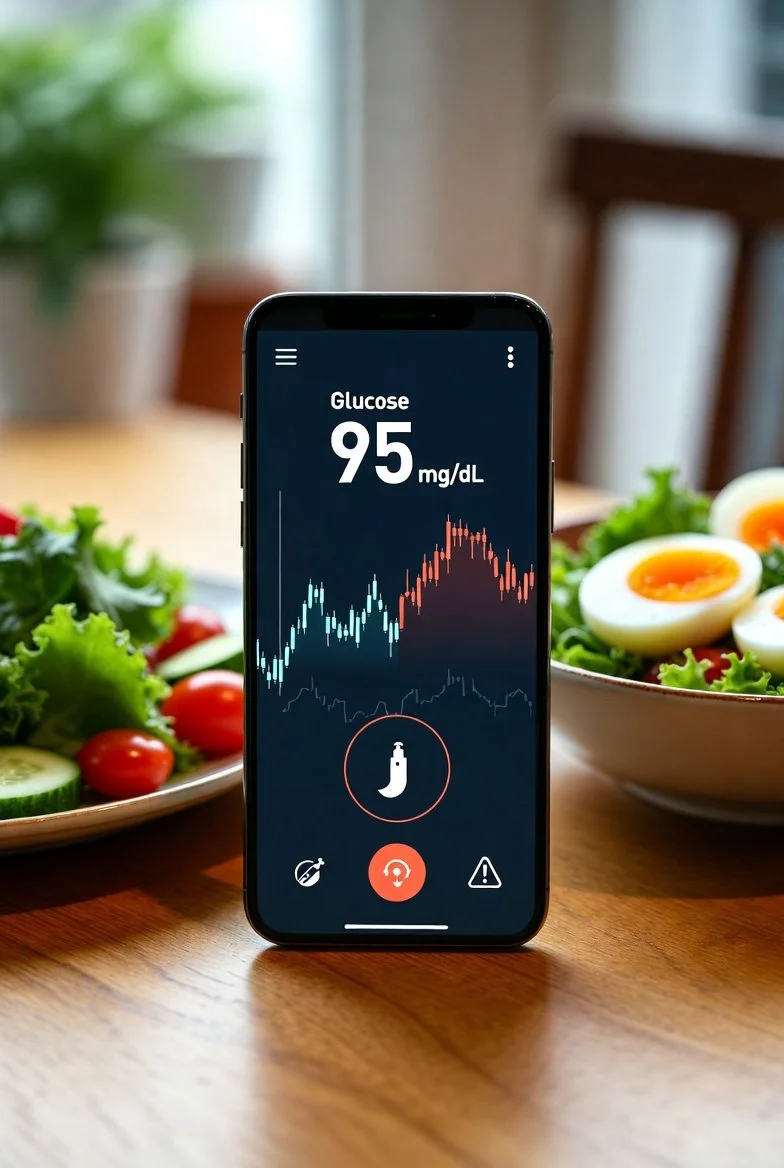
This is where Continuous Glucose Monitoring (CGM) becomes one of the most powerful awareness tools we have.

At Torre Prime, we use CGM not to label people — but to reveal patterns, identify early risk, and guide smarter decisions long before disease develops.
If you were taught that glucose problems only matter once someone is “diabetic,” you were taught Medicine 2.0.

In modern longevity medicine, glucose is not a diagnosis — it’s a signal. And like most important signals in the body, it often changes long before symptoms appear.

This is where Continuous Glucose Monitoring (CGM) becomes one of the most powerful awareness tools we have.

At Torre Prime, we use CGM not to label people — but to reveal patterns, identify early risk, and guide smarter decisions long before disease develops.

What Is a CGM — and Why It’s Different From a Blood Test

A Continuous Glucose Monitor is a small wearable sensor that tracks glucose levels 24 hours a day, typically every 5–15 minutes, for 10–14 days at a time.

Unlike a single fasting glucose or A1c, CGM shows:

  • How your glucose responds to real meals

  • What happens after exercise

  • The impact of sleep, stress, alcohol, and timing

  • Nighttime glucose patterns you never see on labs

In other words, it captures how your metabolism actually behaves in real life.

This makes CGM an awareness tool, not just a diagnostic one.

Why “Normal Labs” Can Still Miss Metabolic Risk

Many people come to us with:

  • Normal fasting glucose

  • “Acceptable” A1c

  • Good cholesterol numbers

  • A fit or lean appearance

And yet, when we place a CGM, we see:

  • Large glucose spikes after common meals

  • Prolonged elevations after eating

  • Poor overnight glucose stability

  • Stress-related glucose surges

  • Late-night eating that disrupts metabolic recovery

None of this shows up on a single lab draw.

You can look healthy and still be metabolically strained.

The Metabolically Invisible: A Special Consideration for women and Gay Men

This matters especially in populations where appearance, fitness, or leanness is often over-valued as a proxy for health — especially many women and gay men.

In our clinical experience, it is not uncommon to see:

  • Lean or muscular men with significant glucose variability

  • Highly active individuals compensating for poor metabolic recovery

  • Chronic stress, sleep disruption, or alcohol use masking metabolic strain

  • Body composition that looks “fit” while internal signaling is not resilient

There is also a cultural factor: many women and gay men have learned to optimize appearance before health, sometimes unconsciously.

CGM can gently but clearly show when the internal physiology does not match the external image — without shame, blame, or diagnosis.

It simply answers the question:

“How is my body actually handling energy?”

What CGM Teaches That Nothing Else Does

A CGM doesn’t tell you what to eat — it shows you how your body responds.

Common insights include:

  • Two people eating the same meal can have wildly different glucose responses

  • “Healthy” foods may spike one person and stabilize another

  • Protein timing can dramatically blunt glucose spikes

  • Walking after meals often matters more than what you ate

  • Late-night eating can impair overnight metabolic recovery

  • Poor sleep raises glucose even without food

This moves nutrition from ideology to personal physiology.

CGM Is Not About Perfection — It’s About Awareness

At Torre Prime, we do not use CGM to chase flat lines or create food anxiety.

We use it to:

  • Identify early metabolic stress

  • Improve energy and focus

  • Guide smarter meal timing

  • Support training and recovery

  • Reduce long-term cardiometabolic risk

  • Build metabolic flexibility, not rigidity

CGM is a short-term window that creates long-term insight.

Most people only need it once or twice to fundamentally change how they understand their body.

How CGM Fits Into the Torre Prime Model

At Torre Prime, CGM is primarily a Forge-phase tool.

While basic glucose labs help with awareness, CGM goes a step further — it shows how your metabolism performs in real time, under real-world conditions.

That places it squarely in The Forge: Metabolic Strength & Cellular Energy.

  • Forge:
    Build metabolic resilience by understanding glucose dynamics, insulin signaling, meal timing, recovery, and energy utilization — then using that data to improve flexibility, stability, and long-term performance.

CGM helps answer questions like:

  • How efficiently do you clear glucose?

  • How resilient is your metabolism under stress?

  • Are you fueling in a way that supports training, recovery, and energy?

  • Is your body flexible — or fragile — when conditions change?

For many patients, CGM is the moment metabolism stops being theoretical and becomes trainable.

“I finally understand how my body handles energy — and what to do about it.”

The Takeaway

You don’t need to be diabetic to benefit from glucose awareness.
You don’t need abnormal labs to have metabolic strain.
And you don’t need to look “unhealthy” to deserve deeper insight.

CGM helps close the gap between how you look and how you function.

And for many people — especially those who’ve been told they’re “fine” — it becomes the most clarifying tool they’ve ever used.

Want to Explore CGM as Part of Your Longevity Strategy?

CGM is available as part of Torre Prime’s Forge evaluation, with guided interpretation and practical coaching — not raw data dumps.

Awareness first. Alignment next.

Start Strong. Rise Higher.

Read More

The Ultimate Guide to Longevity Medicine in 2026

What Longevity Medicine Actually Is, Why It’s Different, and How to Do It Right

Longevity medicine has officially crossed a threshold.

In 2026, it’s no longer fringe, futuristic, or reserved for Silicon Valley biohackers. It’s becoming a legitimate, evidence-informed medical discipline—one that asks a radically different question than traditional healthcare:

Not “How do we treat disease?” but “How do we preserve function, vitality, and meaning for decades to come?”

This guide explains what longevity medicine really is, how it differs from conventional care and anti-aging marketing, what actually matters in 2026, and how to know whether you’re doing it—or just buying expensive noise.

What Longevity Medicine Actually Is, Why It’s Different, and How to Do It Right

Longevity medicine has officially crossed a threshold.

In 2026, it’s no longer fringe, futuristic, or reserved for Silicon Valley biohackers. It’s becoming a legitimate, evidence-informed medical discipline—one that asks a radically different question than traditional healthcare:

Not “How do we treat disease?” but “How do we preserve function, vitality, and meaning for decades to come?”

This guide explains what longevity medicine really is, how it differs from conventional care and anti-aging marketing, what actually matters in 2026, and how to know whether you’re doing it—or just buying expensive noise.

What Is Longevity Medicine?

Longevity medicine is a preventive, proactive, data-driven approach to extending healthspan—the number of years you live with strength, cognition, independence, and vitality.

It focuses on:

  • Reducing risk before disease appears

  • Preserving physical, metabolic, cognitive, and sexual function

  • Aligning medical strategy with how you actually want to live

Unlike traditional medicine, it does not wait for:

  • A heart attack

  • A diabetes diagnosis

  • A cancer staging report

  • Cognitive decline that’s already underway

And unlike anti-aging marketing, it’s not about:

  • “Reversing aging”

  • Cosmetic fixes

  • Supplement stacks without strategy

Longevity medicine is structured prevention, not wishful thinking.

Medicine 2.0 vs Medicine 3.0 (Why This Shift Matters)

Most healthcare today still operates in what many call Medicine 2.0:

  • Reactive

  • Disease-based

  • Short visits

  • Fragmented specialists

  • Lab “normal ranges” that ignore long-term risk

Medicine 3.0, the foundation of modern longevity medicine, shifts the paradigm:

  • Proactive and preventive

  • Risk-stratified and personalized

  • Focused on trajectories, not snapshots

  • Built around function, not just survival

In 2026, this distinction matters more than ever—because people are living longer, but not better.

The Core Pillars of Longevity Medicine in 2026

Longevity medicine has matured. The signal has separated from the noise. In 2026, effective programs consistently address eight interconnected domains:

1. Cardiovascular Risk — The Silent Driver

Heart disease remains the #1 cause of death, and risk often begins decades before symptoms.

Modern longevity care looks beyond cholesterol alone and evaluates:

  • ApoB and particle burden

  • Lipoprotein(a)

  • Blood pressure patterns

  • Inflammation markers

  • Imaging (CAC, CT angiography when appropriate)

Waiting for symptoms is no longer acceptable.

2. Metabolic Health — The Root System

Insulin resistance, visceral fat, and poor metabolic flexibility quietly fuel:

  • Heart disease

  • Cancer risk

  • Cognitive decline

  • Low energy and fatigue

Longevity medicine prioritizes:

  • Body composition over weight alone

  • Glucose regulation

  • Protein adequacy

  • Muscle preservation

Metabolic health is not cosmetic—it’s foundational.

3. Strength, Muscle, and Physical Capacity

After age 40, muscle loss accelerates unless actively resisted.

In 2026, longevity medicine treats strength like a vital sign:

  • Resistance training

  • Stability and balance

  • VO₂ max and aerobic capacity

  • Mobility and joint integrity

If you can’t lift, carry, balance, and recover, longevity becomes theoretical.

4. Cognitive Health — Before Symptoms

Dementia prevention does not begin with memory loss.

Longevity care assesses:

  • Sleep quality

  • Hearing

  • Vascular health

  • Mood and stress

  • Cognitive load and recovery

The goal is preserving clarity, not reacting to decline.

5. Sleep and Circadian Health

Sleep is no longer considered “lifestyle”—it’s medical infrastructure.

Longevity medicine evaluates:

  • Sleep duration and efficiency

  • Circadian alignment

  • Sleep-disrupting medications

  • Hormonal and stress contributors

You cannot out-supplement poor sleep.

6. Sexual Health and Vitality

Libido, erectile function, and sexual energy are early warning signals, not indulgences.

In 2026, longevity medicine recognizes sexual health as:

  • A cardiovascular marker

  • A hormonal signal

  • A quality-of-life pillar

  • A motivator for engagement and behavior change

Vitality matters.

7. Emotional Health and Stress Physiology

Chronic stress silently erodes:

  • Sleep

  • Metabolism

  • Blood pressure

  • Immune function

  • Relationships

Longevity medicine integrates:

  • Nervous system regulation

  • Emotional resilience

  • Recovery capacity

Not as therapy replacement—but as medical reality.

8. Purpose and Alignment

Longevity without meaning fails.

In 2026, the best programs acknowledge that:

  • Purpose affects physiology

  • Identity shapes behavior

  • Disconnection accelerates decline

Longevity is not just adding years—it’s ensuring you want to live them.

What Longevity Medicine Is Not

Clarity matters.

Longevity medicine is not:

  • A supplement subscription

  • A hormone mill

  • A cosmetic clinic with labs

  • A one-time “executive physical”

  • A guarantee of outcomes

Any program promising certainty should raise concern.

Longevity medicine manages risk, probability, and trajectory—not destiny.

How Torre Prime Approaches Longevity Medicine

At Torre Prime, longevity is structured into clear phases, not vague promises:

  • The Sentinel — Awareness & Risk Mapping

  • The Compass — Turning data into direction

  • The Forge — Metabolic and cellular resilience

  • The Temple — Strength, VO₂ max, stability, and performance

  • The Lighthouse — Cognitive, stress, and sleep alignment

  • The Flame — Vitality, intimacy, and hormonal health

  • The Horizon — Purpose and internal architecture

  • The Summit — Integration and yearly recalibration

Each phase builds on the last. No shortcuts. No overwhelm.

And full transparency:

At Torre Prime, we believe in 100% transparency of medical care and patient ownership of your own health. The documents we provide you are the same documents and reports going into your files, and you have access to them anytime you choose — because it's your health, and they're your records.

Who Longevity Medicine Is For (and Who It Isn’t)

Longevity medicine is ideal if you:

  • Are healthy but want to stay that way

  • Feel “off” despite normal labs

  • Want to be strong, clear, and capable decades from now

  • Prefer prevention over reaction

  • Value data and meaning

It may not be right if you:

  • Want quick cosmetic fixes only

  • Prefer minimal involvement

  • Aren’t ready to engage with your own health

Longevity is participatory.

The Bottom Line for 2026

Longevity medicine is no longer about living forever.

It’s about:

  • Fewer medical surprises

  • More physical capability

  • Clearer thinking

  • Sustained vitality

  • A body that supports the life you want to live

Done correctly, it’s not extreme—it’s intentional.

Ready to Begin?

If you want to understand your personal risk map and where to intervene first, the starting point is The Sentinel.

Start with awareness. Then build forward.

Read More

What Insurance-Based Health Care Really Costs Over a Lifetime — And What Longevity Medicine Saves

South Florida has some of the highest insurance costs in the U.S. Learn how Torre Prime’s longevity medicine model helps prevent disease, reduce lifetime medical expenses, and extend healthspan through proactive, data-driven care. - By Gabriel Felsen
What Insurance-Based Health Care Really Costs Over a Lifetime — And What Longevity Medicine Saves

Introduction

Insurance-based care is built to treat disease, not prevent it. As Peter Attia describes in Outlive, the existing system is structurally optimized for reactive “Medicine 2.0” — waiting for illness, then treating it — rather than avoiding the Four Horsemen altogether (atherosclerosis, cancer, neurodegeneration, metabolic disease).

Longevity medicine, by contrast, shifts your lifetime trajectory.
Not with promises, not with guarantees — but with earlier diagnostics, deeper metabolic work, and daily behavior change that alters the slope of decline.

Here’s what the average person spends in an insurance-based model, what it buys, and how Torre Prime’s longevity approach reframes the entire cost equation.

The Lifetime Cost of Insurance-Based Medicine

Insurance Premiums: ~$6,000–$15,000 per year for decades

For most adults, insurance premiums cost $500–$1200/month, whether they use the system or not. Employers may cover a portion, but the out-of-pocket spending is still substantial.

Over 40 years, this becomes:

  • $240,000–$600,000 in premiums alone

  • Plus deductibles, co-pays, imaging fees, medications, ER visits, urgent care, and specialist consults

Insurance premiums are not health investments. They are risk pooling payments, not performance investments.

The Hidden Costs of Late Diagnosis

Most insurance-based care waits for disease to appear before paying attention.
This delay increases lifetime costs dramatically.

Examples:

  • Atherosclerosis often develops silently for 20–30 years before a heart attack. The first real “screening” is the heart attack itself.

  • Prediabetes and early insulin resistance usually go undetected for years, creating a path toward Type 2 diabetes.

  • Cognitive decline begins in midlife but is only recognized when it’s too late to reverse.

Late identification → more procedures → more medications → more expenses.

Lifelong Medication Stacking

Insurance-based care often leads to:

  • Statins

  • Blood pressure meds

  • Diabetes meds

  • Sleep meds

  • Anxiety/depression meds

  • Pain meds

  • Erectile dysfunction meds

  • Anti-inflammatory meds

A typical 60-year-old American is on 5–7 medications.
Over a lifetime, this can cost an additional $80,000–$150,000+, not counting emergency care from side effects or interactions.

High-Cost Events: Hospitalizations & Surgeries

Even with insurance, a single hospitalization or major surgery can cost:

  • $10,000–$40,000 out of pocket

  • Or substantially more depending on the deductible

Back surgery, knee replacement, stents, CABG, ER admissions for metabolic crises, and unplanned hospitalizations are among the largest lifetime cost drivers.

These events are often the result of chronic issues that were never prevented — because the system isn’t built to prevent, only to respond.

What Longevity Medicine Saves — Financially and Functionally

Torre Prime’s approach is built on Medicine 3.0 principles: assess early, treat root causes, and extend the healthspan rather than simply delaying disease.

Below is not a claim of guaranteed savings — but a description of the economic and functional shifts that occur when someone invests in proactive health versus reactive care.

Avoiding the Most Expensive Events in Medicine

The costliest medical events in America are:

  • Heart attacks

  • Strokes

  • Cancer treatments

  • Neurodegenerative care

  • Disability from metabolic disease

If a longevity strategy reduces the odds of even one major event, it often pays for the entire lifetime cost of membership.

A single ICU hospitalization can exceed $80,000.
Stroke recovery can cost $100,000–$200,000 in year one alone.
Cancer treatments often exceed $200,000+.

Prevention is financially superior to rescue.

Early Identification Cuts Costs by Decades

Insurance covers:

  • Basic bloodwork

  • Only age-based screening

  • Very limited metabolic monitoring

  • No mitochondrial assessments

  • No proactive hormone/strength/longevity-focused optimization

  • No CGM except for diabetes

  • No advanced lipid management unless disease is already present

Torre Prime includes:

  • ApoB-first lipid strategy

  • Lp(a) testing

  • hs-CRP

  • Zone 2 and VO2 targeting

  • Strength and stability progressions

  • Sleep structure optimized for Downstate recovery

  • Cancer screening hierarchy

  • Metabolic flexibility development

  • Nutrition tailored to protein, glucose response, and gut triggers

  • Cognitive protection protocols (Lighthouse)

When problems are caught early, interventions are cheaper and more effective.

Less Medication, Less Disability, More Working Years

Insurance-based care frequently leads to:

  • Polypharmacy

  • Cascading side effects

  • Reduced earning potential from illness

  • Reduced functional independence

Longevity medicine focuses on:

  • Reversing metabolic disease

  • Maintaining VO2max and functional strength

  • Preserving cognition

  • Sustaining hormones, sleep, and recovery

  • Avoiding disability for as long as possible

Functional health = economic health.

Better Healthspan = Lower Lifetime Costs

The most expensive years of life are the last 10–15 years.
If you extend healthy years — even without extending life — you reduce:

  • Nursing home costs

  • Chronic care support

  • Medication load

  • Hospitalizations

  • Surgeries

  • ER visits

  • Transportation limitations

  • Caregiver reliance

Even a modest compression of morbidity saves enormous resources.

This isn’t a guarantee — it’s an observed pattern across all of aging research.

The Bottom Line: What You Pay vs. What You Get

Insurance-Based Care

  • Pays for sickness

  • Rewards late intervention

  • Expensive in crisis

  • Does not include deep metabolic testing

  • Does not optimize longevity

  • Leads to progressive decline and increased lifetime costs

Total lifetime cost:
$300,000–$800,000+ out of pocket
(not including lost productivity, functional decline, or quality-of-life costs)

Torre Prime Longevity Programs

  • Proactive, data-driven, prevention-oriented

  • Strength-forward, protein-forward, metabolism-forward

  • Designed to prevent the four major cause of death and disease in the modern world

  • Built to reduce hospitalizations, surgeries, medications, and disability

Total lifetime investment:
A fraction of the reactive model
with returns measured in function, healthspan, fulfillment, and resilience.

You can’t outsource your health to an insurance company.
They are built to reimburse illness — not protect vitality.

Read More

Longevity Medicine vs. Anti-Aging Aesthetics: What’s the Real Difference?

Most people who “want to look younger” aren’t actually chasing youth—they’re chasing vitality, confidence, and a sense of control over their health. But in today’s wellness landscape, two very different industries often get blended together: Longevity Medicine and Anti-Aging Aesthetics. - Gabriel Felsen MD

Why the Distinction Matters—for Everyone, and Especially for Gay, Bisexual & Queer Men

Most people who “want to look younger” aren’t actually chasing youth—they’re chasing vitality, confidence, and a sense of control over their health. But in today’s wellness landscape, two very different industries often get blended together: Longevity Medicine and Anti-Aging Aesthetics.

At Torre Prime, we work with all adults who want to live longer, stronger, and more connected lives—and we offer a dedicated space for gay, bisexual, and queer men who often face unique physiological and social stressors that mainstream healthcare rarely accounts for.
Understanding this difference isn’t just semantic—it changes what’s possible for your life, your healthspan, and your sense of agency.

Part 1: What Is Longevity Medicine?

Longevity medicine is evidence-based, preventive, deeply individualized medical care designed to:
• expand healthspan (the years lived disease-free)
• prevent the chronic diseases that drive most suffering
• preserve physical and cognitive function over decades
• optimize metabolic, hormonal, emotional, and social wellbeing
• add quality to your life—not just years

It follows a structured, physician-guided model similar to the Torre Prime approach:
Sentinel → Compass → Forge → Temple → Lighthouse → Mirror → Flame.
The focus is on assessment, precision diagnostics, and long-game planning.

Longevity medicine includes:
• Advanced labs and biomarker mapping
• Cancer-screening risk stratification
• ApoB-first lipid strategy and cardiovascular prevention
• Cognitive decline protection and Downstate recovery strategies
• Zone 2 and VO2max training
• Strength, power, and stability training (Centenarian Decathlon)
• Sleep architecture optimization
• Nutrition personalized by metabolic response
• Emotional health, relationships, and stress-load mapping
• Social connection design
• Hormone assessment and optimization only when appropriate

It’s built on measurable science and clear goals—not the fear of aging.

Part 2: What Is Anti-Aging Aesthetics?

Anti-aging aesthetics aims to modify appearance, not biology.
This includes:
• Botox, fillers, neuromodulators
• Laser treatments
• Peels, microneedling
• Surgical procedures
• Hair-removal or hair-restoration treatments
• Skin tightening and smoothing

These treatments can be confidence-enhancing, useful, and safe when done well. But they don’t address:
• metabolic dysfunction
• cardiovascular risk
• inflammatory pathways
• mitochondrial aging
• muscle loss
• cognitive decline
• sleep fragmentation
• social disconnection
• emotional burnout
• longevity-relevant hormone patterns

They treat surface phenotype, not root-cause physiology.

Part 3: Why the Confusion Happens

Most people know what Botox does.
Few people know their apoB, their zone 2 threshold, or what a CAC score actually predicts.

The aesthetic world is visible and immediate; longevity medicine is slower, quieter, and more transformative.
Both matter—but they serve different human needs.

At Torre Prime, we’re not anti-aesthetics. Aesthetic treatments make sense for many people. But they’re not a substitute for medical longevity.

Part 4: Why This Difference Matters Especially for Gay, Bisexual & Queer Men

This community often lives with:
• higher minority stress load
• elevated cortisol and autonomic imbalance
• higher rates of sleep fragmentation
• higher risk for metabolic and cardiovascular issues
• unique sexual-health patterns
• culturally driven body-image pressures
• high social emphasis on youthfulness
• community-driven appearance norms

Anti-aging aesthetics often becomes the first stop, when what’s truly needed is a deeper medical foundation.
Longevity medicine provides:
• metabolic resilience
• strength and joint protection
• heart-attack and stroke prevention
• cognitive and emotional stability
• sexual vitality over decades
• hormone pattern optimization when appropriate
• sustainable energy
• extended quality years

This is not about chasing youth—it’s about protecting the body you want to live in.

Part 5: How to Decide Which You Need

You might be a good fit for longevity medicine if you want to:
• feel stronger, clearer, more energetic
• prevent disease long before symptoms appear
• improve sleep, metabolic health, sexual vitality
• reduce inflammation and injury risk
• build a decades-long physical foundation
• enhance confidence from the inside out

You might be a good fit for aesthetic care if you want to:
• soften lines
• improve skin texture
• reshape or enhance specific features
• address visible signs of aging
• boost self-image through appearance-based change

Many people benefit from both, but the order matters:
Aesthetics layered on top of a healthy foundation looks better, lasts longer, and reduces risk.

Part 6: Why Torre Prime Focuses on Longevity First

Because no aesthetic treatment can compete with:
• well-regulated inflammation
• healthy mitochondria
• stable blood sugar
• strong muscle and powerful joints
• a resilient cardiovascular system
• deep structured sleep
• a nervous system not living in threat mode
• a life filled with connection and meaning

That’s why Torre Prime exists for everyone—with specialized expertise for gay, bi, and queer men who’ve historically been underserved in preventive medicine.

We don’t sell youth.
We teach you how to build a durable, vital, connected life.

Closing Message

Aesthetic medicine can enhance confidence.
Longevity medicine changes your life.

When these two worlds are understood clearly, you can choose the path—or the combination—that aligns with your long-term wellbeing.

If you want to explore where you fit, Torre Prime offers a welcoming, inclusive consultation space for anyone ready to build a healthier future.

Read More

The True Cost of Waiting: What Delaying Longevity Care Might Cost You in Your 40s and 50s

Gay men often spend years optimizing everything but their health. The real power move is starting longevity care before symptoms appear — because waiting costs more than you think. - Gabriel Felsen MD
Most men tell themselves they’ll start taking health seriously “soon.” But soon often turns into later — and later can quietly steal years of vitality, strength, and confidence. At Torre Prime, we help men, especially gay and bisexual men, move from surviving to thriving by optimizing metabolism, hormones, strength, sleep, and purpose.

Because when you wait on longevity, you pay for it — in money, time, and freedom.

1. Waiting costs you energy and performance

After 40, testosterone, muscle mass, and recovery all decline about 1–2 % per year. For gay men, that can mean lower libido, slower recovery from workouts, less drive, and more fatigue — all of which can be mistaken for “just aging.” Longevity medicine helps reverse those trends before they become your new normal.

2. Waiting costs you healthspan

The real goal isn’t just to live longer — it’s to stay strong, sharp, and sexually alive longer. When you put off blood work, cardiovascular training, and hormone optimization, small metabolic changes (like rising ApoB, insulin, and body fat) silently build up risk for heart disease, diabetes, and cognitive decline.

Ten years of delay can mean ten fewer years of high-quality living.

3. Waiting costs you money

The Milken Institute estimates that poor metabolic health costs Americans more than $1 trillion each year in direct and indirect expenses. Preventive longevity care — labs, fitness, coaching, hormone optimization — costs a fraction of what managing chronic illness later will.

A simple comparison:

  • Investing about $5,000 per year in precision longevity care during your 40s – 50s can help prevent or delay major disease.

  • A single cardiac event, cancer treatment, or prolonged disability can easily exceed $100,000 in medical and lost-income costs.

Starting early isn’t expensive — waiting is.

4. Waiting costs you confidence and connection

In the gay community, health, body image, and vitality carry emotional weight. Feeling strong, focused, and sexually confident isn’t vanity — it’s alignment between your physical body and your sense of self. When you neglect your energy, hormones, or fitness, it doesn’t just affect your labs — it affects how you show up in relationships and in life.

The Torre Prime Approach

Our philosophy blends the science of Outlive, Good Energy, Forever Strong, and The Power of the Downstate:

  • Prevent the Four Horsemen — heart disease, cancer, metabolic dysfunction, and cognitive decline.

  • Build strength and stability so your body supports your desires and goals.

  • Honor recovery — because your downstate (sleep, parasympathetic balance, connection) is where the magic happens.

  • Embrace identity and purpose — because longevity without meaning isn’t living, it’s maintenance.

The Bottom Line

If you’re a gay man in your 40s or 50s, the most important investment you can make isn’t a supplement or gym membership — it’s time. Every year you delay building your longevity plan, the cost of catching up rises.

Start now. Get your baselines. Build strength. Optimize your recovery. Protect your hormones, heart, and brain.

Because the true cost of waiting isn’t what you spend on longevity care — it’s what you lose when you don’t.

Gabriel Felsen MD | Torre Prime | Longevity. Vitality. Connection.

Read More

Connection Is Medicine: The Hidden Health Effects of Loneliness

At Torre Prime, we believe longevity is not about living forever — it’s about living fully. Science gives you the tools. Soul gives you the reason. - Gabriel Felsen MD

— Gabriel Felsen, MD

When was the last time you felt truly seen — not just in the room with others, but genuinely connected?

We live in one of the most socially connected times in history, yet loneliness and isolation were recently declared a national epidemic. And the truth is, it’s not just an emotional issue — it’s a biological one.

As a longevity physician, I see this every day. People ask about supplements, hormones, and bloodwork. But when we dig deeper, what’s missing isn’t magnesium or testosterone — it’s connection.

Loneliness, it turns out, is as dangerous to your health as smoking 15 cigarettes a day.

Loneliness vs. Social Isolation: What’s the Difference?

These words get used interchangeably, but they’re not the same thing.

  • Social Isolation is the objective lack of contact with others — living alone, few friends, or infrequent interactions.

  • Loneliness is the subjective feeling of disconnection — that sense of being unseen or misunderstood, even in a crowd.

You can have hundreds of contacts and still feel lonely, or live alone and feel completely fulfilled. The difference lies in meaningful connection — being known, accepted, and valued for who you really are.

The Biology of Disconnection

When we feel lonely, our body reacts as if we’re in danger. It’s an ancient survival mechanism — isolation once meant vulnerability.

That means loneliness triggers the stress response:

  • Elevated cortisol, raising blood pressure and inflammation.

  • Suppressed immune function, making you more likely to get sick.

  • Disrupted sleep cycles, robbing the brain of restorative deep rest.

  • Even shorter telomeres — the protective caps on your DNA that shrink as you age.

Over time, chronic isolation increases your risk for:

  • Heart disease and stroke

  • Dementia and cognitive decline

  • Depression and anxiety

  • Premature mortality

In short: loneliness accelerates aging.

When we talk about longevity, we often focus on diet, exercise, or supplements. But connection is the original longevity medicine — it lowers inflammation, boosts immunity, and restores nervous system balance.

The Intersection of Chronic Illness, HIV, and Depression

For many in our community, loneliness is compounded by chronic illness and stigma.

HIV, for example, carries unique emotional weight. The ongoing need for disclosure, fear of judgment, and fatigue from long-term care can deepen isolation — even in people with strong medical support. Yet research shows that social connection improves medication adherence and even immune function among people living with HIV.

Depression works the same way — it both causes and worsens loneliness. The brain literally processes emotional pain through the same regions as physical pain. That’s why rejection or disconnection can feel like a punch to the gut.

And for LGBTQ+ individuals, minority stress — the chronic strain of navigating stigma, discrimination, or invisibility — takes a measurable toll on both mental and physical health. Many of us find belonging through chosen family, but when those bonds shift through aging, relocation, or loss, the risk of isolation increases again.

How to Recognize the Warning Signs

Loneliness doesn’t always look like sadness. Often, it shows up as fatigue, irritability, or self-neglect.

Common risk factors include:

  • Living alone or losing a partner

  • Retirement or loss of daily structure

  • Chronic illness or physical limitations

  • Major life transitions (divorce, relocation, coming out later in life)

And warning signs can be subtle:

  • Skipping social gatherings

  • Neglecting appearance or hygiene

  • Expressing feelings of hopelessness or being “invisible”

  • Spending hours online without real contact

If you recognize these in yourself or someone you love, it’s not a weakness — it’s a signal. The body is asking for connection.

Connection as a Longevity Prescription

The antidote to loneliness isn’t just “getting out more.” It’s rebuilding your body’s capacity for connection — physically, emotionally, and spiritually.

Here’s where I start with patients:

1. Reset your nervous system.
Rest and recovery aren’t indulgent — they’re essential. Deep sleep, time in nature, and slowing down all help your body re-enter what sleep expert Sara Mednick calls the Downstate — the healing mode where connection becomes possible again.

2. Anchor yourself with rituals of connection.
Have a weekly dinner, join a walking group, volunteer, or start attending community events. Rituals build rhythm — and rhythm builds belonging.

3. Aim for one genuine connection per day.
A real conversation. A phone call. Eye contact with someone at the café. These micro-moments of presence stimulate oxytocin, the hormone of trust and safety.

4. Seek professional or peer support when needed.
Therapy, support groups, and telehealth check-ins are valid medical interventions. For LGBTQ+ adults, spaces like the Pride Center at Equality Park, SAGE, or peer HIV navigator programs offer structured ways to reconnect.

5. Reframe loneliness as biology — not failure.
Feeling lonely doesn’t mean you’re broken; it means your system is sending a survival signal. You are wired to belong.

Connection Is Medicine

Loneliness isn’t cured by willpower — it’s healed through relationship.

When you reconnect — with people, purpose, and community — you shift your body back into balance. Your hormones, immune system, and heart all respond.

So as you think about your own health this week, ask yourself:
Who will I reach out to — not out of obligation, but out of care?

Because connection is medicine. And every meaningful interaction is a dose that helps you live longer, stronger, and more fully alive.

Local Resources:

Dr. Gabe Felsen
Men’s Longevity and Vitality Physician
Torre Prime — Start Strong, Rise Higher.

Read More