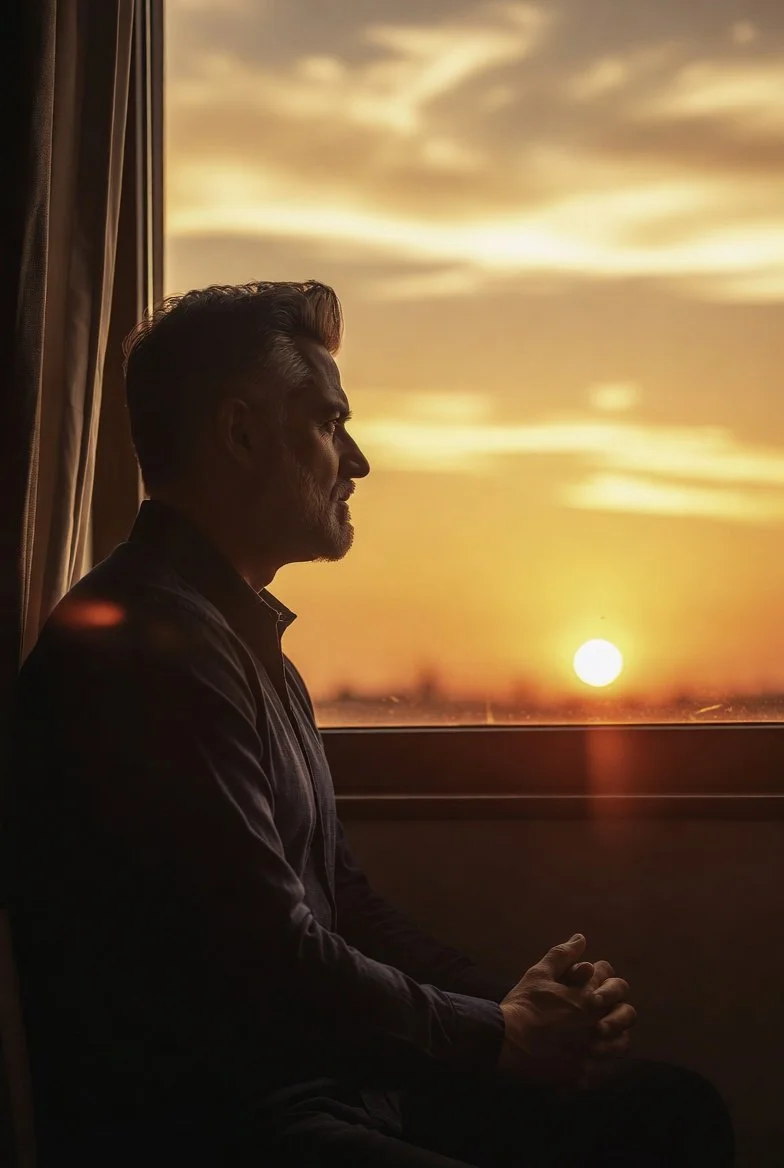
The Missing Years: When Men Stop Seeing Doctors—and What Those Years Cost
Many men go years without seeing a physician or getting labs done. Learn what those “missing years” mean for heart health, hormones, cancer risk, and longevity—and why waiting until symptoms appear costs valuable healthspan.
Most men don’t make a conscious decision to stop seeing doctors.
It happens quietly.
A skipped annual physical.
A lab panel that “can wait another year.”
A sense of I feel fine—why bother?
Then suddenly, five… ten… sometimes fifteen years pass without a physician visit that actually looks under the hood.
In longevity medicine, we call this gap the missing years—and they matter more than most men realize.
The Pattern: How Men Drift Away From Medical Care
For many men, medical care follows a predictable arc:
Childhood & adolescence: Routine checkups are handled by parents.
Early adulthood: Sports physicals, work clearances, urgent care visits.
Mid-30s to early 40s: Life gets busy. Careers, relationships, caregiving, stress.
Midlife: Care becomes reactive instead of preventive—if it happens at all.
Men are less likely than women to seek preventive care, less likely to get routine labs, and more likely to show up after symptoms appear.
Not because they don’t care—but because modern medicine hasn’t been built around how men actually relate to their bodies.
What Gets Missed During the “No-Doctor” Years
The problem isn’t that nothing is happening during these years.
The problem is that everything is happening silently.
1. Cardiovascular Risk Accumulates Quietly
Atherosclerosis doesn’t announce itself.
Plaque builds over decades. ApoB particles circulate. Blood pressure creeps up. Insulin resistance begins long before glucose crosses diagnostic thresholds.
By the time symptoms appear, the process is already well-established.
2. Metabolic Drift Goes Unnoticed
Many men gain:
Visceral fat
Insulin resistance
Loss of lean muscle mass
Declining mitochondrial efficiency
None of these show up on a scale alone. They require intentional measurement—fasting insulin, triglyceride/HDL ratios, body composition, inflammatory markers.
Without labs, metabolic decline is often mislabeled as “just getting older.”
3. Hormonal Shifts Are Ignored or Normalized
Testosterone doesn’t fall off a cliff overnight.
It declines gradually, often alongside:
Poor sleep
Chronic stress
Weight gain
Inflammation
Without tracking, men adapt to lower energy, lower libido, slower recovery—and assume it’s inevitable.
It isn’t always.
4. Cancer Risk Evolves in the Background
Many cancers are detectable earlier than men think—but only if someone is looking.
Prostate trends, colon cancer risk, liver changes, hematologic signals—these often leave subtle fingerprints years before diagnosis.
The missing years are where early warning signs are lost.
5. Cognitive & Emotional Health Shifts Are Minimized
Men often power through:
Brain fog
Mood flattening
Anxiety masked as irritability
Poor stress recovery
Without structured evaluation, these get blamed on work, age, or personality rather than physiology, sleep disruption, inflammation, or metabolic strain.
Why “Feeling Fine” Is a Terrible Screening Tool
One of the most dangerous assumptions in men’s health is:
“If something were wrong, I’d know.”
In reality, most longevity-limiting conditions are asymptomatic until late.
Feeling fine simply means your body is compensating—for now.
Longevity medicine is about identifying where compensation is happening before it breaks.
The Cost of the Missing Years
The longer the gap, the more medicine becomes:
Reactive instead of preventive
Medication-heavy instead of lifestyle-directed
Crisis-driven instead of strategic
Men who go a decade without labs often re-enter the system not with questions—but with diagnoses.
And that changes the conversation dramatically.
Reframing the First Visit Back
At Torre Prime, we don’t view the return to care as “catching up.”
We see it as re-establishing awareness.
The goal isn’t to pathologize the past.
The goal is to map risk honestly, clearly, and without judgment.
The first step isn’t treatment.
It’s orientation.
Where are you now?
What’s changing?
What’s still resilient?
What’s quietly drifting?
The Real Question Isn’t “Why Didn’t I Go?”
The real question is:
“If I don’t look now… what will I wish I had known sooner?”
Longevity isn’t about living forever.
It’s about not losing good years unnecessarily.
And the missing years are often where those losses begin.
Torre Prime Perspective
We believe the most important medical visit for many men isn’t their first diagnosis—it’s the moment they decide to start paying attention again.
Because awareness, when done early enough, changes everything.
The Most Common Regrets Gay Men Have About Their Health in Their 50s
Many gay men reach their 50s wishing they had started caring for their metabolism, strength, sexual vitality, and emotional health sooner. In this article, Dr. Gabriel Felsen breaks down the most common regrets—and how modern longevity medicine can help you change your trajectory starting today.
When I meet gay men in their 50s—whether at my clinic, at community events, or in a telemedicine visit—there’s a pattern that appears so consistently it’s almost predictable.
A sense of “I wish I had started sooner.”
Not because they’ve done anything wrong, but because no one ever taught them how their body really works, what longevity actually means, or how gay men’s health differs from the general population.
Based on my clinical work, decades of lived community experience, longevity research, and many of the stories shared directly with me, here are the seven most common health regrets gay men express in their 50s—and more importantly, what you can do about them now.
1. “I wish I had taken my metabolism seriously earlier.”
Many gay men arrive in midlife feeling like their metabolism changed “overnight.”
It didn’t.
It was slowly drifting for decades.
The regret:
Not paying attention to abdominal fat, rising waist size, creeping blood sugar, or declining muscle mass until they suddenly mattered.
What this really reflects:
Untreated insulin resistance
Chronically elevated glucose swings
Loss of metabolic flexibility
Inconsistent protein intake
Lack of intentional strength training
What to do now:
A metabolic reset is absolutely possible in your 50s.
The tools are:
Continuous glucose monitoring (CGM)
Strength training 3–4 days/week
High-protein, low-sugar nutrition
Tracking waist circumference, not just weight
2. “I should have protected my brain earlier.”
Gay men disproportionately face chronic minority stress, sleep disruption, burnout, and cortisol dysregulation.
By the 50s, this shows up as:
Brain fog
Forgetfulness
Poor focus
Emotional reactivity
Decreased sleep quality
The regret:
Not treating the brain as a long-term investment.
The truth from modern longevity science:
Brain aging begins in our 40s.
APOE4 risk, sleep quality, metabolic health, and stress load all shape cognitive aging.
What to do now:
Prioritize sleep as a biological training zone
Reduce alcohol (and other things)
Train VO2 max, not just muscles
Optimize vitamin D, B12, Omega-3
Address loneliness and social isolation (huge for gay men)
3. “I wish I had kept my strength.”
By 50, most men have lost over 30% of their peak muscle mass unless they actively trained strength.
For gay men specifically:
Aesthetics often overshadow function in youth
Cardio is overemphasized
True strength training is often delayed until too late
The regret:
Not building the “muscle reserve” that determines how well you age after 60.
Medicine 3.0 reality:
Muscle is the most important organ of longevity.
What to do now:
Heavy strength training 2–3×/week
Grip, carry, squat, hinge, and pull
Track your centenarian decathlon movements
Protein target: 1g per lb of ideal body weight
4. “I wish I had protected my sexual vitality.”
Many gay men in their 50s tell me:
“I thought erectile changes were just part of aging.”
They’re not.
The regret:
Waiting until their 50s to address:
Erections
Testosterone changes
Performance anxiety
Dopamine-driven exhaustion
Porn desensitization
Partner misalignment
Shame-based avoidance of sexual healthcare
Gay sexual health is both physical and emotional.
Men often suffer silently, believing something is “wrong” with them.
What to do now:
Assess hormones (don’t guess)
Address metabolic health (huge for erections)
Manage performance anxiety and sleep
Consider Trimix, PDE5 inhibitors, or combination protocols
Treat sex as part of overall vitality—not a separate topic
5. “I wish I had addressed sleep decades ago.”
Gay men have higher rates of insomnia, inconsistent schedules, nightlife habits, and cortisol shifts related to chronic stress.
By your 50s, poor sleep accelerates:
Weight gain
Brain aging
Hypertension
Mood instability
Erectile dysfunction
The regret:
Not understanding that sleep is the most powerful longevity drug we have.
What to do now:
A consistent bedtime (10 PM is ideal)
Reduce blue light 2 hours before bed
Target 90 minutes of slow-wave sleep
Reduce alcohol and late-night eating
Prioritize parasympathetic recovery (Downstate)
6. “I wish I had gotten my screenings earlier.”
This one is huge.
Gay men often avoid—or are not guided toward—early screening for:
Colorectal cancer
Prostate cancer
Coronary calcium scores
ApoB and advanced lipid panels
Sleep apnea
Liver health
STI screening
HIV PrEP management
Bone density
The regret:
Assuming that “normal labs” mean optimal health.
What to do now:
Medicine 3.0 means testing early, testing deeply, and acting proactively—not reactively.
7. “I wish I hadn’t waited to build a support system.”
By age 50, many gay men discover an unexpected truth:
Longevity requires other people.
Yet:
Many lived portions of life in secrecy or shame
Many avoided forming deep community
Many lost friends to HIV
Many struggle with midlife dating or partnership
Many fear being alone as they age
The regret:
Not investing in emotional well-being and community sooner.
The truth:
Loneliness is as dangerous as smoking 15 cigarettes a day.
What to do now:
Rebuild chosen family
Create routine contact—weekly dinners, group chats, meet-ups
Practice vulnerability
Build friendships around shared health goals
Work with a longevity physician trained in mental and emotional health
Why These Regrets Matter—And Why They’re Not Fixed Destiny
Here’s the message I give every man who walks into Torre Prime:
Regret is information.
Not punishment.
Not fate.
Just information.
And when you use regret as data, not shame, you gain something incredibly rare in healthcare:
Control.
You can rewrite your 50s.
You can change your trajectory for your 60s.
And your 70s, 80s, and beyond can look radically different than your parents’ generation.
That’s the entire purpose of longevity medicine.
What Torre Prime Does for Gay Men in Their 40s and 50s
At Torre Prime, we treat gay men’s longevity as its own specialty.
Our framework includes:
Deep-dive metabolic testing
CGM-guided nutrition
Hormone and sexual vitality medicine
Sleep architecture optimization
The Centenarian Decathlon
Advanced labs (apoB, Lp(a), insulin, inflammatory markers)
Early cancer screening
Stress load analysis
Cognitive preservation
Emotional and relational health
Community-building strategies
Because gay men deserve health care that gets us—not just “tolerates” us.
You don’t have to wait until you’re 60 to start over.
You can start today.