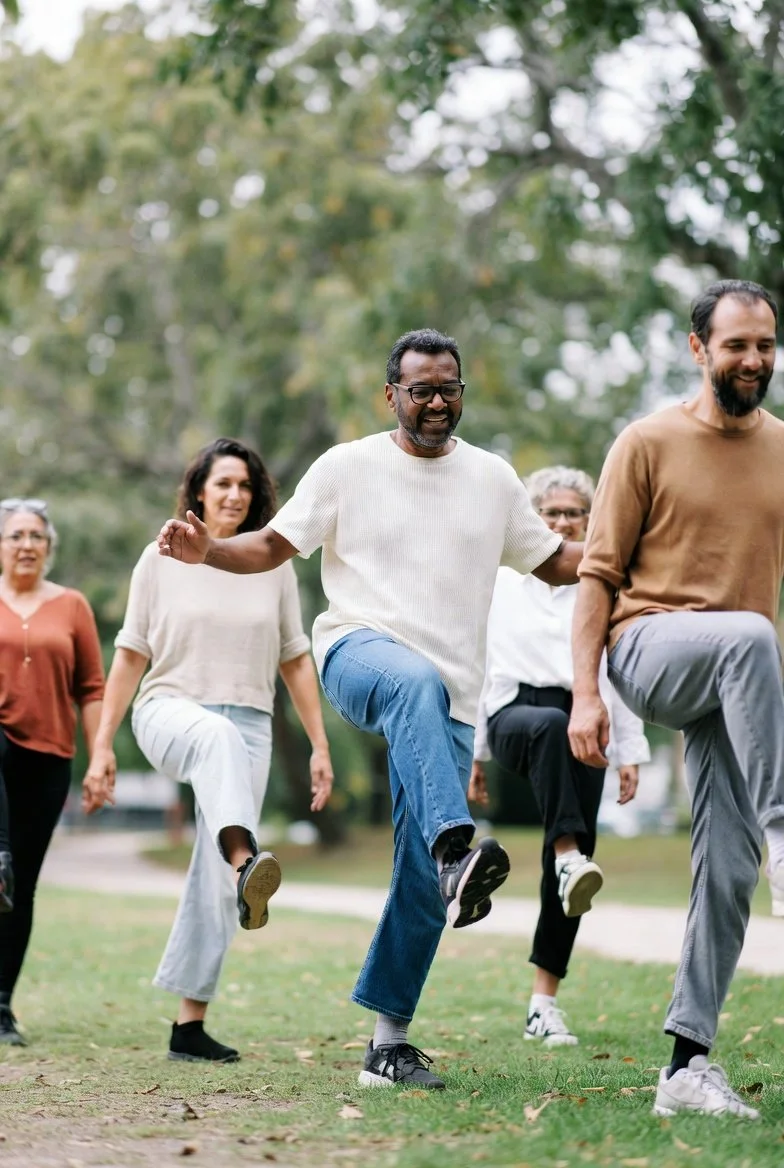
The Foundation of Longevity Most People Skip
The Part of Longevity Training No One Talks About
When people think about longevity, they think about lifting heavier weights, improving cardio, or optimizing nutrition and hormones. Very few think about stability.
And yet stability is the foundation that makes all of those things safe, effective, and sustainable.
You don’t lose strength first as you age.
You lose control first.
That loss of control is what leads to injuries, fear of movement, reduced activity, and ultimately decline.
The Part of Longevity Training No One Talks About
When people think about longevity, they think about lifting heavier weights, improving cardio, or optimizing nutrition and hormones. Very few think about stability.
And yet stability is the foundation that makes all of those things safe, effective, and sustainable.
You don’t lose strength first as you age.
You lose control first.
That loss of control is what leads to injuries, fear of movement, reduced activity, and ultimately decline.
The Pattern Almost Everyone Has Lived
Have you ever been off to a great start with a new training program or activity — feeling stronger, more motivated, finally consistent — only to suffer an injury a few weeks or months in?
Suddenly you’re not just “off track.”
You’re in a worse position than when you started.
The injury slows your momentum.
Movement feels risky.
Confidence drops.
Training stops altogether.
This isn’t bad luck.
It’s usually a missing foundation.
When stability isn’t in place, early gains outpace your body’s ability to control force. Muscles get stronger faster than joints, tendons, and coordination can adapt — and something eventually gives.
Longevity isn’t about how fast you start.
It’s about whether your body can hold the progress you make.
What Stability Really Is
Stability is not just balance, and it’s not a rehab concept.
Stability is your body’s ability to:
control joint position
coordinate muscles at the right time
maintain alignment under load
respond to unexpected movement without injury
In everyday life, stability determines whether force goes through muscle or into joints, discs, and tendons.
That distinction matters more with every passing decade.
Why Stability Is the True Longevity Multiplier
Injury Ends Momentum
Most long-term decline doesn’t start with disease.
It starts with a fall, a back injury, or a joint problem that never fully resolves.
Once movement feels unsafe, people move less. When people move less, everything else follows: loss of strength, metabolic decline, cardiovascular risk, and isolation.
Stability reduces this risk by preserving control — not just at rest, but under stress.
Strength Without Stability Doesn’t Last
You can build muscle without stability, but you can’t keep it.
Without stability:
knees collapse
spines absorb load they shouldn’t
shoulders lose centration
compensations accumulate silently
Eventually something gives.
Stability is what allows strength to be expressed safely and repeatedly over years, not just months.
Independence Depends on Stability, Not Power
The movements that define aging well are not max-effort tasks:
standing up from a chair
walking on uneven ground
carrying groceries
catching yourself when you trip
These are control problems, not strength problems.
Longevity isn’t about how much you can lift.
It’s about how well you can move when life isn’t predictable.
Why Most People Skip Stability
Stability work doesn’t look impressive.
It’s slow.
It’s subtle.
It doesn’t chase numbers.
But it’s also the work that:
prevents setbacks
protects joints
preserves confidence in movement
keeps people training into their 60s, 70s, and beyond
In other words, it works — just quietly.
How to Train Stability for Longevity
Stability training doesn’t require special equipment or long sessions. It requires intention.
Effective stability work is:
slow and controlled
focused on alignment
done frequently
integrated into other training
Examples include:
single-leg movements with control
slow step-ups and step-downs
carries with posture awareness
controlled hinges and rotations
core bracing during movement
At Torre Prime, stability is a core focus of THE TEMPLE phase — where we build a body that can tolerate load, adapt to stress, and keep performing over time.
Even 5–10 minutes per day can significantly improve movement safety and confidence.
The Longevity Takeaway
Stability is not optional.
It’s not corrective.
It’s not “extra.”
It is the foundation of longevity most people skip — and the reason so many training programs eventually fail.
If you want strength that lasts, endurance you can rely on, and independence you don’t have to fear losing, stability comes first.