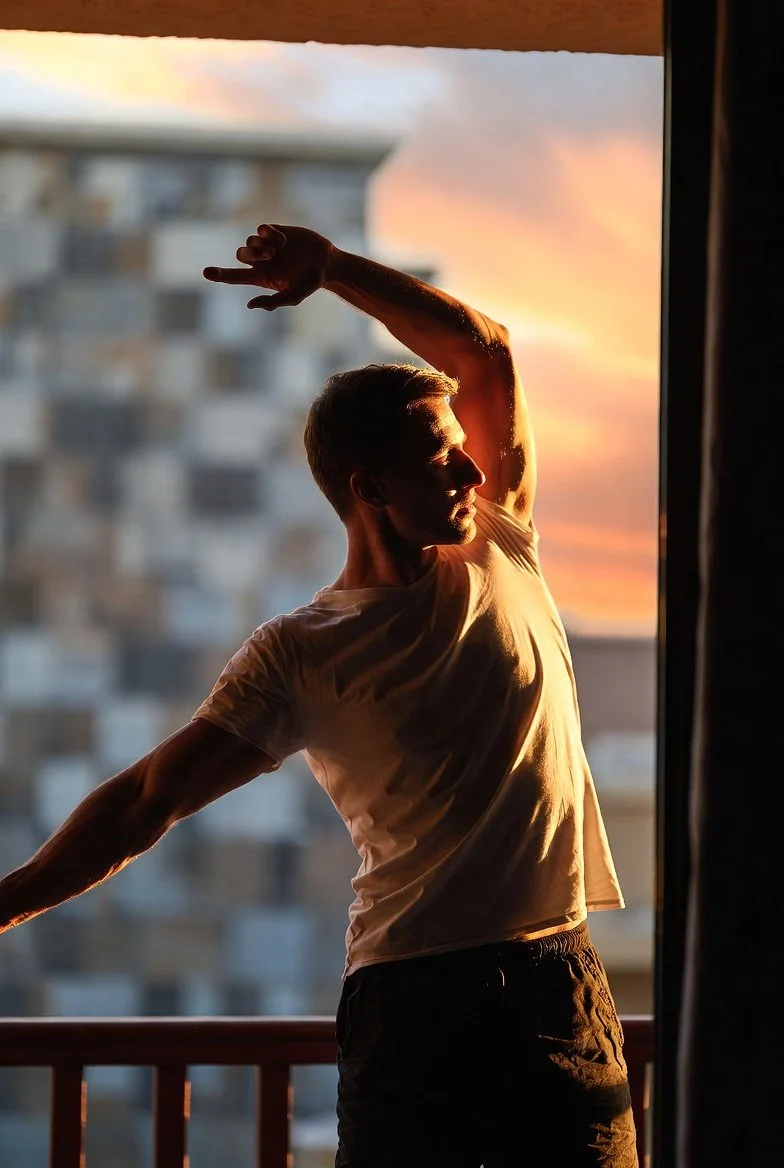
Travel, Rest, Move: The Longevity Approach to Physical Activity on Vacation
Working Out & Staying Physically Active on Vacation
How to protect your body, energy, and momentum—without turning your trip into a boot camp
Vacation is meant to restore you, not derail you. At Torre Prime, we don’t view physical activity on vacation as a “discipline test.” We see it as maintenance of momentum—protecting strength, mobility, metabolic health, and nervous system regulation while you’re away from your normal routine.
You don’t need long workouts, perfect programming, or a gym membership. You need movement with intention.
How to protect your body, energy, and momentum—without turning your trip into a boot camp
Vacation is meant to restore you, not derail you. At Torre Prime, we don’t view physical activity on vacation as a “discipline test.” We see it as maintenance of momentum—protecting strength, mobility, metabolic health, and nervous system regulation while you’re away from your normal routine.
You don’t need long workouts, perfect programming, or a gym membership. You need movement with intention.
Why Movement on Vacation Matters
When you stop moving entirely, even for a week, the body adapts quickly—often in the wrong direction.
On vacation, complete inactivity can contribute to:
Increased stiffness and joint pain
Loss of strength and muscle activation
Worsened blood sugar control
Poor sleep quality
Lower mood and mental clarity
Staying active—even lightly—helps preserve:
Muscle tone and neuromuscular coordination
Metabolic flexibility
Circulation and lymphatic flow
Stress regulation and sleep rhythm
This isn’t about “burning calories.” It’s about keeping the system online.
Reframing the Goal: Move, Don’t “Train”
Vacation workouts are not the time to chase PRs or punish yourself for enjoying food and rest.
Instead, aim for:
Short sessions
Full-body movements
Low friction (easy to start, easy to finish)
Activities that enhance the trip rather than compete with it
Think of movement as supporting your vacation, not stealing time from it.
The Vacation Movement Hierarchy
If you do nothing else, prioritize movement in this order:
Walking comes first
Walking is the most underrated vacation exercise. Exploring cities, beaches, trails, or neighborhoods on foot:
Supports cardiovascular health
Improves insulin sensitivity
Enhances digestion
Reduces stress
Aim for daily walking without obsessing over distance.
Mobility and joint care
Travel tightens hips, backs, calves, and shoulders. Five to ten minutes of gentle mobility in the morning or evening can:
Reduce soreness
Improve posture
Prevent next-day stiffness
Brief strength activation
Two to three short sessions during the week help maintain strength signals to the body:
Bodyweight squats or lunges
Push-ups (or incline push-ups)
Rows using bands or luggage
Planks or carries
Ten to twenty minutes is enough.
A Simple No-Equipment Vacation Routine
Use this anywhere—hotel room, beach, balcony, or park.
Do 2–4 rounds at a relaxed pace:
Squats or split squats
Push-ups or wall push-ups
Hip hinges (good mornings or glute bridges)
Plank or dead bug
Slow nasal breathing between rounds
You should finish feeling energized, not depleted.
Built-In Vacation Workouts (That Don’t Feel Like Work)
Some of the best vacation movement doesn’t look like exercise at all:
Swimming in the ocean or pool
Hiking or nature walks
Paddleboarding or kayaking
Biking to explore a new area
Playing with kids or walking markets
If you’re breathing a little harder and smiling, it counts.
What About Gyms?
If your hotel has a gym and you enjoy it—great. If not, skip the stress.
Vacation fitness should:
Reduce friction
Increase enjoyment
Fit your environment
Forcing a gym routine that feels inconvenient often leads to skipping movement entirely.
Recovery Still Counts
Vacation is also a recovery opportunity. Support that with:
Sleep without alarms when possible
Sunlight exposure early in the day
Hydration (especially with heat, alcohol, or flying)
Light stretching before bed
Recovery plus light movement is often more beneficial than hard training with poor sleep.
The Torre Prime Perspective
Longevity isn’t built on perfect weeks—it’s built on consistency across imperfect ones.
Movement on vacation:
Preserves physical capacity
Protects metabolic health
Keeps your nervous system regulated
Makes returning to normal training easier
When you return home, you should feel ready to resume, not like you’re starting over.
Bottom Line
You don’t need to “stay on track” while traveling.
You just need to stay connected to your body.
Move daily. Move simply. Move in ways that enhance the experience of being alive in a new place.
That’s longevity in the real world.